
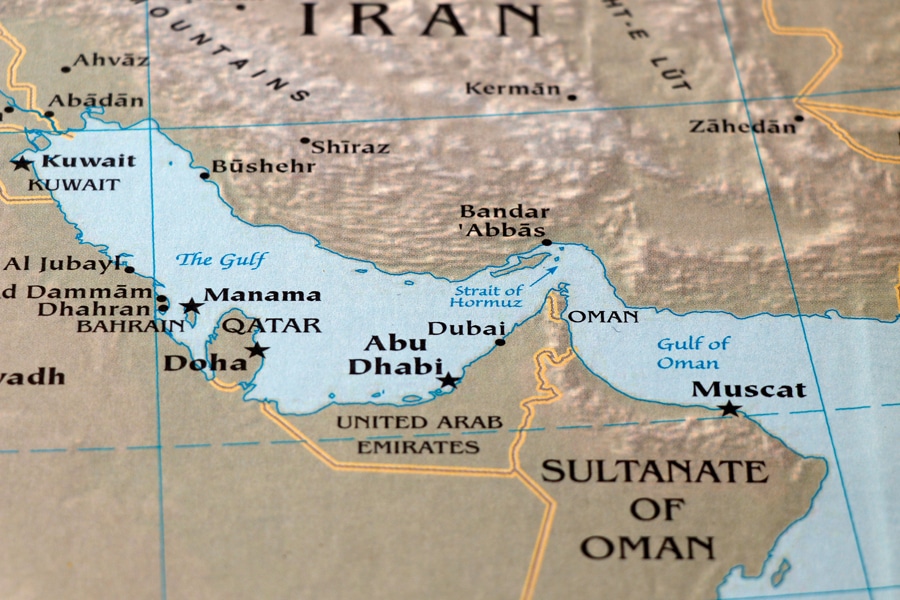
As a result of the airstrikes targeting Iran and the extensive regional countermeasures that followed, the security situation in the Middle East has deteriorated rapidly, affecting both ocean and air freight operations in the region.
Ocean freight
Traffic in the Persian Gulf is currently suspended due to the situation in the Strait of Hormuz. This affects both exports and imports to destinations such as the United Arab Emirates, Qatar, and Kuwait.
Container shipments to and from the Far East have for some time been routed around Africa via the Cape of Good Hope, as carriers avoid instability around the Suez Canal. For the time being, there is no major immediate impact on container traffic between Asia and Europe.
However, a prolonged crisis or an escalation could disrupt international maritime transport more widely, causing equipment imbalances and congestion in major ocean ports.
Air freight
The use of Middle Eastern airspace is currently heavily restricted. Several countries in the region have closed their airspace, and airlines have cancelled or re‑routed flights that would normally pass through major cargo hubs such as Doha, Dubai, and other key Middle Eastern transit points.
For air freight between the Far East and Finland, alternative routing options remain available that avoid restricted airspaces.
At present, freight transport to most parts of the Middle East is suspended. The situation may change rapidly, affecting both schedules and routing. Longer‑term disruptions to global supply chains are also possible.